
Have you noticed your child squinting at the TV or holding books closer to their face? These symptoms could be early signs of myopia, a vision condition that affects many children. As a parent, you want to protect your child’s eyesight and help them see clearly both now and in the future.
At Optometry on Bronte, we encourage parents to understand how myopia control treatments can slow the progression of nearsightedness in children, thereby helping to protect their long-term eye health. The earlier we address myopia, the more you can help protect your child’s vision.
What Is Myopia & Why Does It Develop in Children?
Myopia, also called nearsightedness, happens when your child can see objects up close clearly, but distant things appear blurry. This occurs when the eye grows too long or the cornea becomes too curved, causing light to focus in front of the retina instead of directly on it.
Increased screen time, less outdoor activity, and more close-up work like reading can all contribute to myopia’s progression.
Without proper management, myopia typically worsens as your child grows. This means stronger prescriptions and a higher risk of eye problems in adulthood.
Early Signs Your Child May Have Myopia
Several warning signs might indicate that your child is nearsighted. Catching these symptoms early means that your eye doctor can act sooner. Look for:
- Squinting or straining to see distant objects, such as the TV or chalkboard
- Holding books, tablets, or screens very close to their eyes
- Experiencing frequent headaches, eye strain, or fatigue after reading or screen time
- Having difficulty seeing the board or participating fully in classroom activities
If you notice any of these signs in your child, schedule an eye exam right away. Pediatric eye exams are crucial for early detection and prompt management of myopia.
Why Myopia Control Matters for Your Child’s Future
When myopia goes untreated, it usually gets worse over time. This means that your child’s prescription will likely get stronger as they grow, leading to thicker glasses and greater dependence on vision correction.
High myopia also increases your child’s risk of developing serious eye conditions as an adult. These include:
- Retinal detachment
- Glaucoma
- Cataracts
- Other vision complications
Myopia control treatments help slow eye elongation and reduce these long-term risks. Starting treatment early can preserve your child’s eye health for decades to come.
How Your Eye Doctor Tracks Myopia Progression
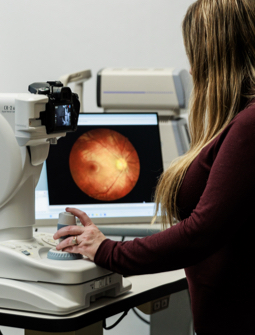
Axial Length Measurement
Axial length refers to the length of the eye from front to back. Myopic eyes are elongated, which means that this measurement allows your eye doctor to track how quickly your child’s myopia may be progressing.
Myopia Control Treatment Options for Your Child
Daily Contact Lenses
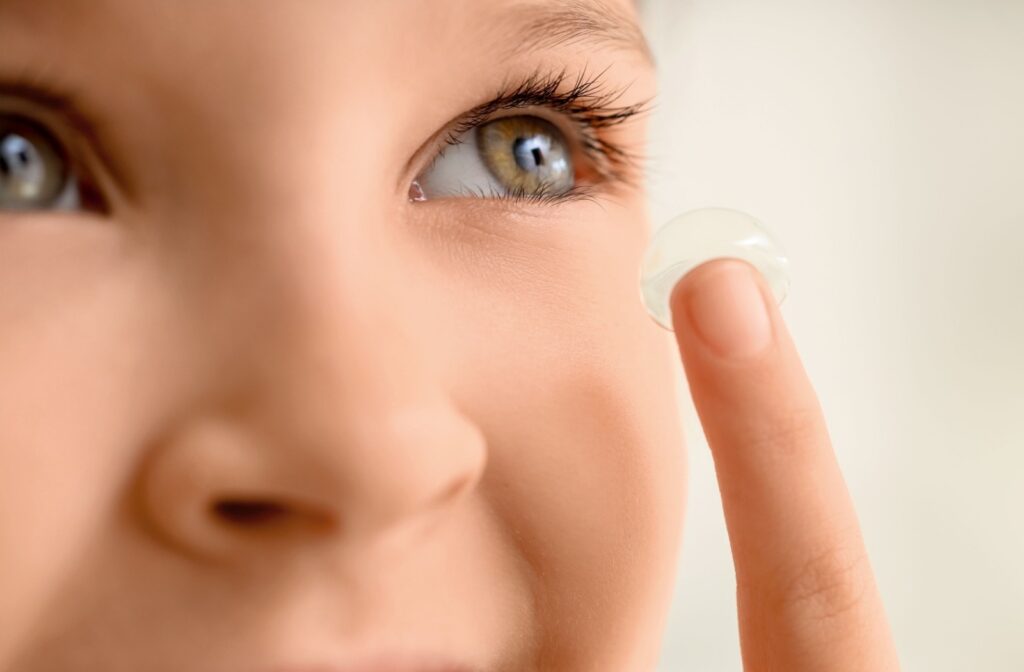
Daily contact lenses like Abiliti and MiSight correct your child’s vision while helping slow myopia progression. These lenses are comfortable, hygienic, and convenient for busy families.
Active children love the freedom these lenses provide for sports and school activities.
Ortho-K Contact Lenses
Ortho-k lenses are worn overnight to gently reshape the cornea while a person sleeps. This provides clear vision without the need to wear contacts during the day, and it also helps to slow the progression of myopia.
Atropine Eye Drops
Low-dose atropine drops relax your child’s focusing mechanism, helping to reduce the signals that cause eye elongation. These drops are simple to use and cause minimal side effects.
Atropine works well alone or combined with contact lenses or glasses.
Myopia Control Glasses
Specialty lenses like HOYA Myopia Management glasses modify how light enters your child’s eye. This helps slow myopia progression while providing clear vision for daily activities.
These glasses are a convenient option for children who prefer not to wear contact lenses.
Combination Treatment Approaches
In some cases, combining treatments provides stronger myopia control than individual therapies. For instance, your eye doctor might recommend pairing atropine drops with contact lenses or glasses for enhanced results. Our team evaluates your child’s needs, lifestyle, and comfort preferences to recommend the most effective approach.
Protecting your child’s vision starts with a comprehensive eye exam to identify myopia early. At Optometry on Bronte, we use modern diagnostic tools to create a myopia control plan that fits your child’s lifestyle while keeping their vision clear and their eyes healthy.
Contact our office today to schedule your child’s eye exam and take the first step toward safeguarding their vision.